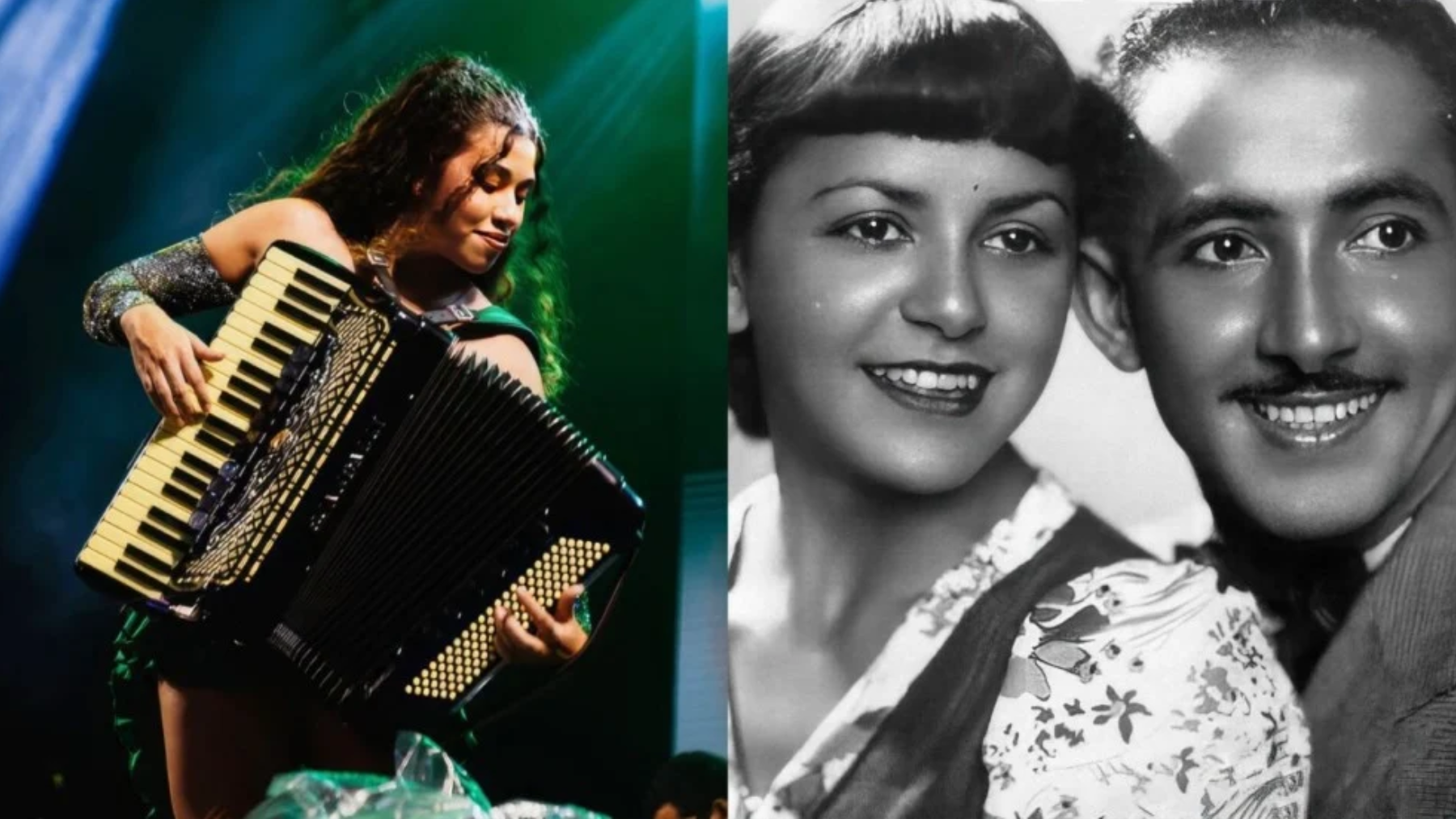
For a long time, the popular memory of forró revolved around celebrated male names. But anyone who follows the day-to-day life of parties, shows, radio circuits, and cultural policies knows: this story was never meant to fit into such a narrow script. The documentary A História das Mulheres no Forró (The History of Women in Forró), directed by Igor Marques, founder of Igoarias Musicais and co-founder of the Embrazado portal alongside GG, steps directly into this blind spot. The film shifts the lens and highlights artists whose trajectories were minimized or simply erased over time.
Available for free on YouTube, the documentary traces nearly a century of women’s contributions to show that, while the official narrative remained restricted, women in forró were composing, creating, organizing, performing, and fighting. Without them, the genre simply would not exist as we know it.
The film gives visibility to fundamental artists from Rio Grande do Norte — voices that shaped eras yet rarely receive proper recognition.
Among them is Ademilde Fonseca, celebrated nationwide as the “queen of choro” – Choro is one of Brazil’s oldest and most iconic popular music genres. Long before that title, back in the 1950s, she was already recording material connected to baião and coco, paving sonic paths that would later be absorbed into the forró universe. Her pioneering movement opened doors for other women in an industry where men dominated contracts, repertoires, and radio slots.
Another key figure featured is Hermelinda Lopes, member of Trio Mossoró, who carried the music of the Potiguar sertão to national circuits and later built a strong solo career.
Beyond revisiting historical trajectories, the documentary also turns to the present. Anne Louise, from Roraima, for instance, is the first professional female accordionist in the state, and her career began with situations that should be simple.
In the film, she recalls moments on stage when sound technicians asked to speak with “the man in the band,” as if she were not the lead musician. Still, Anne has performed with Duda Beat, Marina Sena, and João Gomes, and played Marinês in a musical. The experience, she says, shaped her identity.
“It was a process that helped me understand who I am when playing forró.”
Also part of this contemporary renewal is Joyce Alane, from Pernambuco, who has been releasing fresh reinterpretations of forró classics while honoring their roots, especially in her album Casa Coração. She has collaborated with João Gomes and Dorgival Dantas, bringing forró into conversation with the new MPB.
Speaking with MashUp, Igor Marques explained that everything began with personal discomfort: his own forró references were overwhelmingly male. When he searched online for women in forró and found a void, he saw both urgency and opportunity.
According to him: “When I realized that, it became clear that online research about ‘Women in forró’ didn’t reflect their actual presence in the genre’s history. I already wanted to make longer videos for Igoarias, so I took this scenario as a chance to dive into a project that demanded more time and dedication.”
Some discoveries during filming were especially transformative, particularly those that contradict the mainstream narrative about forró. One of them was brought to him by musician Caçapa:
“I was shocked to learn that women had recorded xote, baião, coco, and toada even before Luiz Gonzaga entered the recording industry. The stories of Stefana de Macêdo and the duo Xerém and Tapuya opened an entirely new world to me. The fact that this information was buried for so long says a lot about how women’s contributions are erased.”
Another encounter that left a deep impression was with Dona Joana Alves, a national reference in safeguarding forró and one of the key figures responsible for having the genre recognized as Intangible Cultural Heritage of Brazil by IPHAN in 2021.
“She [Dona Joana] dedicated her entire life to forró, building bridges, shaping policies, bringing communities together. It’s extraordinary work that still hasn’t received the recognition it deserves.””
During his research, Igor identified more than 110 women linked to forró, a number he believes is only the beginning. The film showcases exactly this abundance: women composing, producing, arranging, researching, organizing festivals, preserving memory, and opening paths for new generations.
More than documenting stories, the documentary performs a gesture of repair. It reorganizes the historical shelf and returns to these artists the place that was always theirs. It honors those who innovated, who resisted, and who made forró cross decades, states, borders, and cultural cycles.